My Favotite





Endless Runner
View more
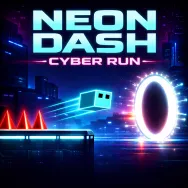







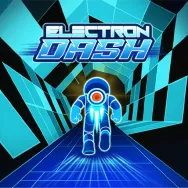
Electron Dash takes familiar foundations and layers them with responsive systems, synthwave-inspired presentation, and movement mechanics that reward understanding rather than memorization. In the game, the tunnel isn’t a backdrop; it’s an active system governed by physics rules that the player must learn to manipulate.
The “Synthwave” Aesthetic
Visuals: Neon as a Performance Tool
The glowing neon palette isn’t just a stylistic choice—it serves a functional purpose. High-contrast colors help the brain identify edges, depth, and movement faster, which is critical in a high-speed runner. Bright surfaces against dark voids reduce visual noise and improve reaction time, allowing players to stay focused even as speed increases.
Audio: Electrotechno and Player Endurance
The electrotechno soundtrack is designed as a loop rather than a traditional score. This creates a steady rhythm that aligns with player movement and decision-making, subtly reinforcing timing and flow.
Physics Gameplay
Attraction and Repulsion as Core Mechanics
At the heart of Electron Dash’s gameplay is a physics system based on attraction and repulsion forces. These mechanics govern how the player interacts with surfaces, gaps, and movement paths. Instead of fixed outcomes, the game responds dynamically to player input, making each run feel slightly different.
Objective and Controls
The objective is straightforward: maintain control for as long as possible while navigating an increasingly demanding environment. The controls remain intentionally simple, ensuring that mastery comes from understanding physics interactions rather than learning complex input combinations.
Who Is Electron Dash For?
Electron Dash appeals to a specific but broad audience
- Reflex chasers who enjoy pushing reaction speed to its limits
- Physics-puzzle fans are looking for deeper mechanics beneath arcade action
- Retro-aesthetic lovers drawn to synthwave visuals and sci-fi minimalism
It’s especially well-suited for players who value mastery, replayability, and clean design over long tutorials or narrative-heavy experiences.
Other Popular Dash Games
 Platform
  Rhythm
  Dash
Dash Comment (0)
Newest
NewestOldestPopular

Be the first to comment